

Research
Our research tackles three questions the quantum era raises: what can quantum computers really do, how do we protect information after quantum, and how can we verify the systems we rely on? Each question drives one of our themes, Computation, Security and Trust, bringing together researchers across our partner universities.
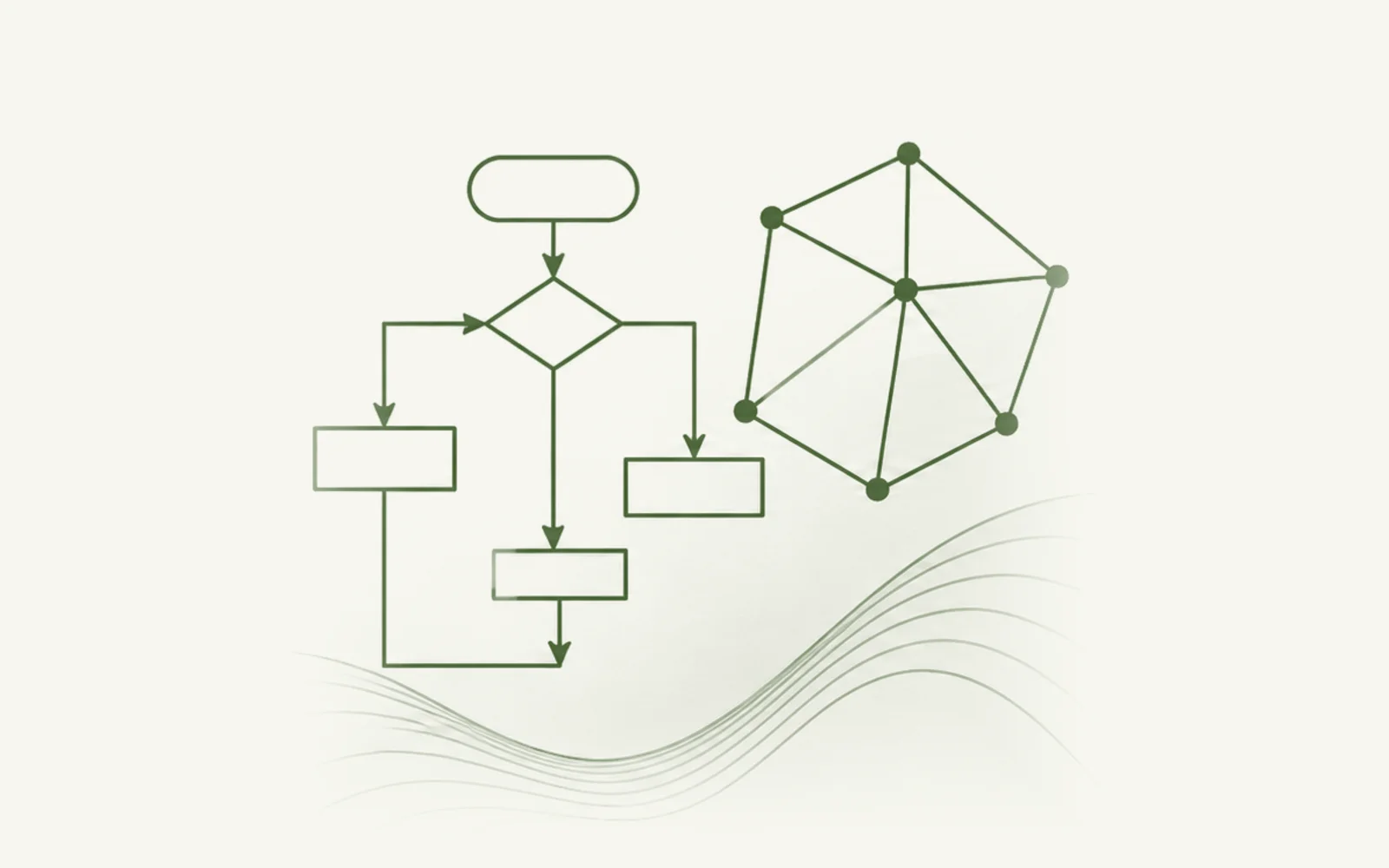
Computation for Quantum Security
The Computation theme drives mathematical discovery, challenges cryptographic assumptions, and analyses algorithmic complexity for a trusted quantum future.
Securing the Digital World in the Quantum Era
Building foundations for quantum-safe cryptography, and designing efficient cryptographic primitives, protocols, and standards to keep us secure in the quantum era.
Trustworthy Verification of Quantum Algorithms
Developing the mathematical foundations of robustness and privacy to ensure that quantum algorithms are reliable and trustworthy.
Computation for Quantum Security
The Computation theme drives mathematical discovery, challenges cryptographic assumptions, and analyses algorithmic complexity for a trusted quantum future.
The Computation theme explores how advanced mathematics and modern computing can strengthen security and trust in the quantum era. At its core is a clear idea: mathematics uncovers new algorithms, and computation turns them into practical tools that help protect information in an increasingly complex digital world. By tackling challenging mathematical problems in areas such as algebra, topology, and dynamical systems, researchers aim to understand which problems remain difficult even for quantum computers, forming a foundation for future security.
Together, these strands translate abstract ideas into practical tools for secure communication and trusted digital systems. By developing powerful computational platforms and drawing on the global expertise of our investigators and partners, the Computation theme helps lay the groundwork for a more secure and dependable quantum future.
Connected efforts
01
Deep mathematical questions
Investigating deep mathematical questions that can inspire new approaches to secure computation.
02
Testing cryptographic methods
Rigorously examining emerging cryptographic methods, testing their strength and identifying weaknesses before they can be exploited.
03
Efficient, reliable algorithms
Studying how efficient and reliable these algorithms are, ensuring they can be trusted and applied in real-world settings.
Researchers in this theme
Securing the Digital World in the Quantum Era
Building foundations for quantum-safe cryptography, and designing efficient cryptographic primitives, protocols, and standards to keep us secure in the quantum era.
Quantum computing poses an unprecedented challenge to the cryptographic systems protecting our digital lives, from banking, healthcare to national security. Despite recent progress, including NIST PQC standards, existing tools for quantum-resistant cryptography remain limited and often impractical. Our research centre is at the forefront of tackling these challenges to build a secure digital future.
Our goal is to stay ahead of the quantum threat, while ensuring a smooth, trustworthy, and accessible transition to a quantum-safe digital world.
Three interconnected pillars
01
Theoretical foundations
Deepening the theoretical foundations of cryptography, developing new approaches, including broadened hardness assumptions and construction methods, to design fundamental primitives, from basic building blocks like encryption to advanced tools such as zero-knowledge proofs, that remain secure against quantum attackers.
02
Efficient, scalable protocols
Designing new efficient and scalable cryptographic protocols, including privacy-preserving protocols that protect sensitive data during computation, and distributed protocols (such as blockchain) that enable secure collaboration across mutually untrusting parties.
03
From theory to practice
Developing tools and standards for migrating existing industry protocols to quantum resistance, and ensuring new protocols are efficient to deploy, implemented correctly, and ready to replace today’s vulnerable systems.
Researchers in this theme
Trustworthy Verification of Quantum Algorithms
Developing the mathematical foundations of robustness and privacy to ensure that quantum algorithms are reliable and trustworthy.
Designing quantum algorithms for optimisation that are considerably faster than classical computations, providing secure cryptographic protocols, and performing efficient data analysis at scale, are only beneficial when these claims can be verified, validated, and trusted.
Our goal is to ground quantum algorithms, their analysis, and purported performance on solid mathematical foundations, to provide rigorous guarantees and clear, reliable understanding of what they do and how useful they are. We will create novel quantum algorithms for searching at scale, mechanisms to assess their robustness and complexity, and rigorous pathways for training machine learning and AI algorithms on quantum computers. We will create benchmarking frameworks that comprehensively compare quantum and classical algorithms across diverse problem landscapes, ensuring that our understanding of quantum algorithms is grounded in both mathematical rigour and practical reality.
The questions we ask
01
Genuine speed-up?
Does the quantum algorithm genuinely run faster than its classical counterpart?
02
Robust and useful?
Is it robust to small errors, and useful in practice?
03
Fully tested?
Have the full breadth of mathematical problems underlying potential cryptographic protocols been tested?
04
Private?
Is the data analysis pipeline leaking sensitive information?
05
As good as claimed?
Are claims of ‘quantum security’ and ‘quantum advantage’ truly as good as claimed in both theory and practice?
Researchers in this theme
MathQuEST

Research
Get involved
Newsletter
Opportunities, news and events, straight to your inbox.
We acknowledge the First Australian owners of the lands on which we gather and pay our respects to the Elders, lores, customs and creation spirit of this country.
© 2026 MathQuEST · ARC Centre of Excellence in Mathematics for Quantum Era Security and Trust